Modern manufactured and modular homes can be appraised and financed in Arizona. The process depends on the home type, land ownership, foundation, installation, title status, appraisal, borrower qualifications, and lender’s program.
For buyers exploring factory-built home financing in Arizona, the first step is identifying exactly what they plan to purchase. A home on owned land may follow a different financing path from a home on a leased homesite.
Understanding those differences early helps you choose a home, build a realistic budget, and approach lenders with useful information.
What does factory-built home mean?
Factory-built is a broad description of where construction takes place. It does not identify one building standard or loan category.
Manufactured homes are constructed on a permanent chassis. Homes built after June 15, 1976, fall under federal HUD construction and safety standards. HUD certification labels and the home’s data plate help document that standard.
Modular homes are built in sections in a factory and assembled at the homesite. They generally follow the applicable state and local building codes where installed. Eligible modular homes receive the same treatment as site-built homes under Fannie Mae’s guidelines.
Mobile homes commonly refers to homes built before the HUD standards took effect. Older homes may have more limited financing options; do not assume they meet modern manufactured home mortgage requirements.
Panelized, precut, and other precision-built homes use different combinations of factory production and on-site assembly. “Precision-built” describes a construction approach, rather than a legal property classification.
Confirm the specific construction standard before comparing loans.
How are factory-built homes appraised in Arizona?
An appraisal estimates market value. It does not automatically assign a lower value because construction occurred in a factory.
For a manufactured home financed as real estate, the appraisal evaluates the completed home, land, and site improvements. A new project may be appraised from plans and specifications, subject to completion and verification.
A manufactured home appraisal may consider:
- Size, age, condition, design, and features.
- Location, market demand, and comparable local sales.
- Land, foundation, installation, and utility connections.
- Site improvements, including permanent garages, porches, and patios.
Manufactured housing has specialized appraisal requirements. Comparable manufactured-home sales may be needed, with program-specific exceptions. In markets with limited comparable sales, appraisers must explain and support their analysis.
For modular homes, Fannie Mae generally follows the comparable-sales approach used for site-built homes. Comparables need not all be modular.
Project cost and appraised value are different measures. Neither a purchase contract nor an upgrade guarantees an equivalent market value.
Can factory-built homes be financed?
Yes. Potential factory-built home loans include several financing paths:
- Conventional mortgages: Available for eligible manufactured and modular properties through participating lenders.
- FHA financing: Manufactured housing may qualify under FHA programs. Title II mortgage financing and Title I manufactured-home financing have different rules.
- VA loans: Eligible borrowers may finance qualifying manufactured housing through lenders offering these loans.
- USDA loans: Qualifying borrowers and properties in eligible areas may qualify, subject to program-specific manufactured-home requirements.
- Construction or construction-to-permanent loans: May fund an eligible new project and transition into permanent financing.
- Land-home financing: Describes financing that includes the home and land; it is not one universal loan program.
- Chattel loans: Personal-property financing secured by the home, commonly relevant when land is not included.
Ask each lender which home types and programs it actually finances. Not every Arizona manufactured home lender offers every option.
Approval, documentation, terms, and property requirements vary. HUD Title I, VA purchase loans, and USDA manufactured-home guidance outline distinct programs.
Does owning the land make financing easier?
Owning land can create additional options, but it does not guarantee approval.
If you already own land, a lender may consider qualifying land equity toward the required contribution. Existing liens, ownership documentation, valuation, and program rules affect that calculation.
If you purchase the home and land together, an eligible land-home transaction may combine both into one mortgage.
If you lease the homesite, financing may focus on the home as personal property. Some programs permit qualifying leasehold arrangements, but an ordinary lot rental should not be assumed eligible.
If the home remains personal property, a standard real-estate mortgage may be unavailable even when the home looks similar to one financed as real estate.
Ask the lender how your ownership arrangement affects the available loans.
Why do foundation and property classification matter?
Lenders need to establish what secures the loan and whether installation meets the selected program’s requirements.
They may review permanent installation, foundation design, permits, inspections, title records, liens, and whether the home and land are legally treated as real property. Engineering or foundation certifications may also be required.
For example, Fannie Mae’s manufactured-home eligibility includes a permanent foundation. That does not mean every personal-property loan follows the same foundation or title rules.
Arizona has an affidavit-of-affixture process involving title surrender and recording with the County Recorder. Buyers should confirm the required steps with their lender, title company, MVD, and county. An affidavit alone does not establish that every mortgage requirement has been met. Arizona MVD affixture guidance
Common financing and appraisal concerns
“Factory-built homes never appraise well.” Appraisals depend on property characteristics and market evidence. There is no universal outcome.
“Banks will not finance manufactured homes.” Financing exists, although some lenders do not offer it.
“You must pay cash.” Cash is one option. Eligible buyers may have mortgage or personal-property financing alternatives.
“The home will automatically lose value.” Future value is uncertain. Consider the home, land, condition, ownership arrangement, and local market together rather than assuming automatic depreciation or appreciation.
“Owning land guarantees approval.” Lenders still evaluate the borrower, property, project, and documentation.
“The advertised home price is the entire financed project.” Starting prices may exclude land, site work, utilities, and transaction expenses. Request an itemized scope.
What buyers should prepare before applying
Use this checklist before committing to a home or homesite:
- Confirm whether the home is manufactured or modular and document its construction standard.
- Review land ownership, zoning, access, and homesite restrictions with the appropriate local offices.
- Estimate the complete project cost, including site development.
- Confirm the proposed foundation and installation plan.
- Gather home specifications, contracts, title or deed information, and available permit records.
- Organize income, credit, debt, and available-funds documentation.
- Speak with lenders familiar with your specific home type.
- Discuss major purchases, new debt, or employment changes with the lender during approval.
For manufactured housing, ask which HUD-label and data-plate documents are needed. For modular housing, ask which code-compliance and completion records the lender expects.
An early lender conversation helps identify requirements before you finalize selections.
Why the complete project budget matters
A home’s base price may represent only part of the amount required to reach move-in.
Depending on the contract and homesite, your budget may include:
- Land purchase.
- Site preparation, grading, and drainage.
- Foundation work, delivery, and installation.
- Permits and inspections.
- Electrical and other utility connections.
- Septic, sewer, well, or water service.
- Driveway access.
- Garages, porches, and exterior improvements.
- Selected upgrades.
- Taxes, insurance, closing costs, and financing expenses.
Ask what is included, excluded, estimated, or still awaiting a site-specific quote. Also ask which expenses can be financed and which require separate funds.
Compare complete scopes of work. Two starting prices may describe very different projects.

How Southwest Homes helps simplify the process
Southwest Homes helps Northern Arizona buyers connect home selection with homesite planning and the steps toward move-in.
The team can help explain home types, review available floor plans, discuss homesite requirements, and clarify the scope of home and site work. Its coordinated build process includes permitting, site preparation, installation, utility connections, and final approvals according to the selected project arrangement.
Explore building on your lot and the Southwest Homes build process to understand those steps.
Clear plans and scope information give you a stronger starting point for lender conversations. Loan approval and appraised value remain subject to the lender’s review and applicable program requirements.
The Southwest Homes difference: CrossMod homes that finance like site-built
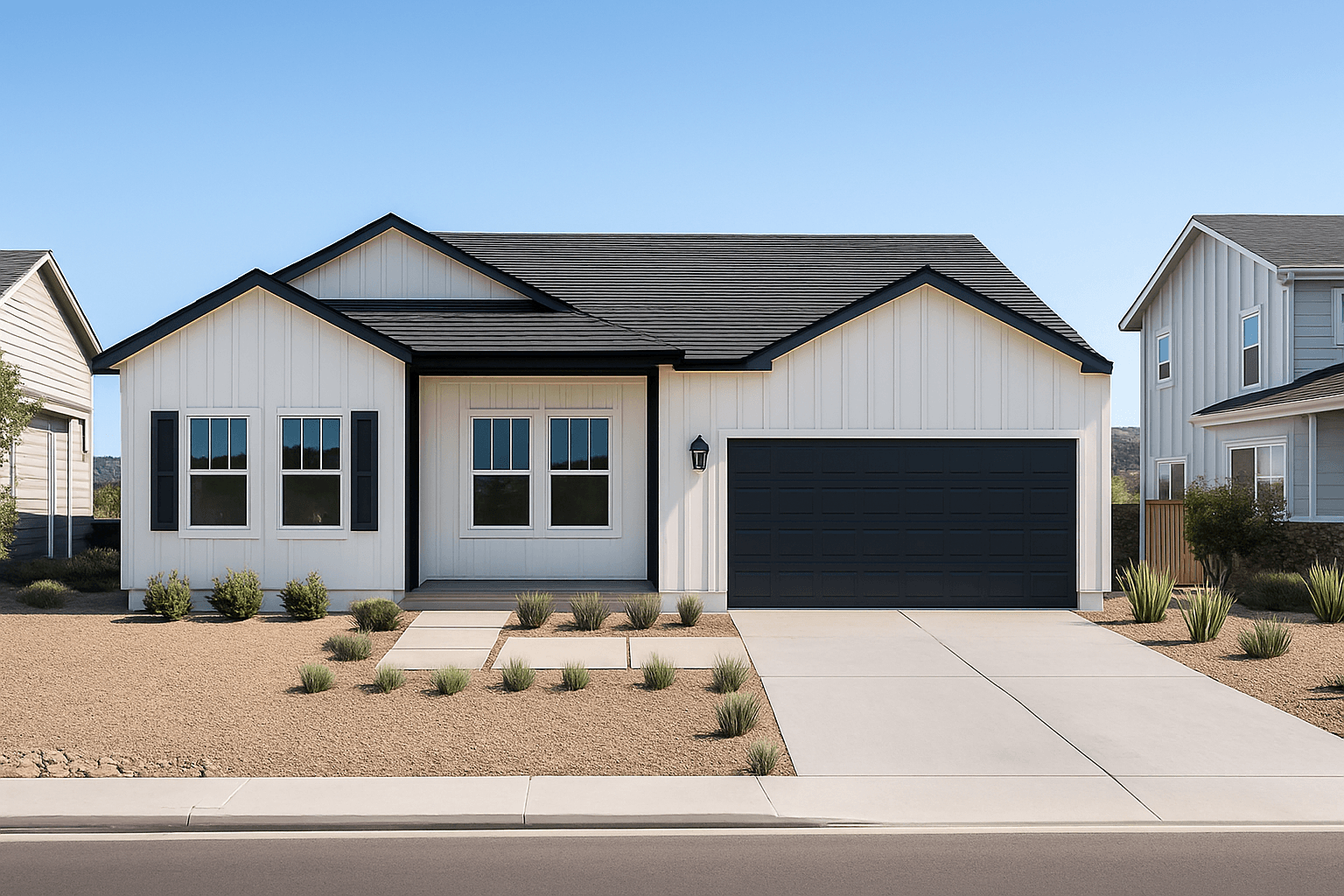
Not every manufactured home is financed the same way. Southwest Homes builds CrossMod homes, a category of HUD-code manufactured homes designed with the architecture, features, and installation of a site-built home. That design standard opens the door to financing that standard manufactured homes can’t access.
Fannie Mae MH Advantage and Freddie Mac CHOICEHome are conventional mortgage programs built specifically for this class of home. Both treat qualifying homes much like site-built houses:
- Site-built loan terms. Qualifying buyers can finance up to 97% LTV, with mortgage insurance comparable to site-built homes on fixed-rate terms.
- No manufactured-home pricing penalty. The standard manufactured-home loan-level price adjustment is waived.
- Site-built comparables. Appraisers first use other MH Advantage or CHOICEHome sales. When enough of those aren’t available, they can use site-built home sales.
That last point is the big one. A standard manufactured home is typically appraised against other manufactured homes. A CrossMod home can be measured against the site-built homes down the street.
What makes a Southwest Homes CrossMod different:
- 5:12 roof pitch. Steeper than the 4:12 minimum the programs require, with eaves that give the home a traditional profile.
- Front porch. Curb appeal that matches the neighborhood.
- Attached garage. Built on site and tied into the home, not a detached afterthought.
- Permanent foundation. Installed and titled as real property, a core requirement for both programs.
Each qualifying home carries a manufacturer’s MH Advantage sticker or CHOICEHome label, and the required site improvements must be complete at appraisal. Southwest Homes coordinates the home, the site work, and the installation so those requirements are met as part of the build.
The result: a factory-built home positioned for site-built financing and site-built-level appraisals. Final loan approval and appraised value remain subject to the lender’s review and program requirements. Fannie Mae MH Advantage | Freddie Mac CHOICEHome
Frequently asked questions
Can you get a traditional mortgage on a manufactured home?
Yes, if the borrower and property meet the selected program’s requirements. Real-property status, installation, foundation, and documentation are important considerations.
Are modular homes financed like site-built homes?
Generally, eligible modular homes follow the same mortgage framework as site-built homes. New projects may need construction financing before permanent financing.
Does a manufactured home have to be on a permanent foundation?
Many real-estate mortgage programs require one. Personal-property financing may follow different rules. Confirm the foundation and certification requirements with your lender.
Can land be included in manufactured-home financing?
Yes, eligible land-home financing may include both. The lender must approve the property, transaction structure, and borrower.
Can I use land I already own as part of the financing?
Sometimes. Qualifying land equity may count toward the required contribution, depending on valuation, liens, documentation, and program rules.
What happens if the appraisal is lower than the total project cost?
The lender may reduce the available loan amount. Discuss additional funds, scope changes, renegotiation where possible, or a documented appraisal review through the lender. No adjustment is guaranteed.
Do factory-built homes appreciate in value?
They can, but appreciation is not guaranteed. Land, location, condition, ownership arrangement, and market demand influence future value.
Should I contact a lender before selecting a home?
Yes. Early conversations help establish a budget and identify home, land, foundation, and documentation requirements before you commit.
What is a CrossMod home?
A CrossMod home is a HUD-code manufactured home built with site-built features, including a pitched roof, porch, garage, and permanent foundation. Qualifying CrossMod homes can be financed through Fannie Mae MH Advantage or Freddie Mac CHOICEHome, which offer terms and appraisal methods comparable to site-built homes.
Plan your home and financing together
Factory-built housing can provide a practical path to homeownership when the home, land, financing, and complete project budget are evaluated together.
Contact Southwest Homes to explore available homes, discuss your property or homesite needs, and clarify the project steps. Then work with a qualified lender to confirm the financing path for your situation.